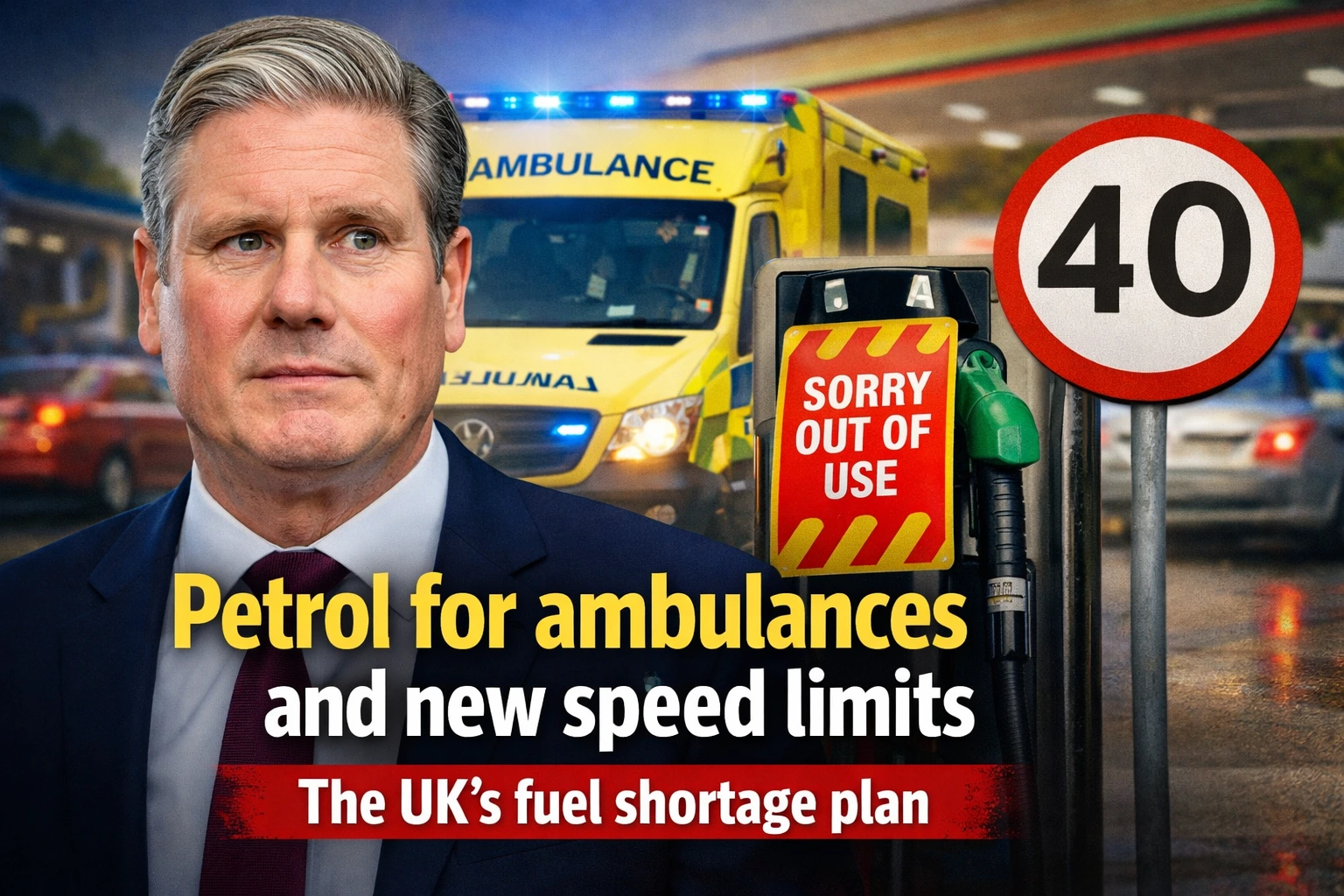
The UK government is preparing contingency plans to deal with potential fuel shortages linked to the ongoing conflict involving Iran, which has disrupted global oil flows through the Strait of Hormuz—a key route for around 20% of the world’s oil supply.
Despite these concerns, Downing Street has reassured the public that petrol stations across the UK remain well-stocked and that there is currently no need for panic or changes in normal driving habits. Prime Minister Keir Starmer emphasized that drivers should continue as usual, even as officials quietly prepare for possible disruptions.
Planning for worst-case scenarios
Government officials have confirmed they are preparing for “all eventualities,” including the possibility of fuel rationing if supplies become severely constrained. While petrol availability is expected to remain stable for now, experts warn that diesel shortages could begin to impact the UK as early as late April.
Energy analysts suggest that if the situation worsens, essential sectors such as healthcare, food distribution, utilities, and public transport may be given priority access to fuel. This could mean restrictions for regular consumers if supplies tighten significantly.
Concerns from industry and experts
Industry leaders have urged the government to clearly outline its contingency plans to avoid uncertainty. Experts warn that diesel supply chains are particularly vulnerable, and shortages could disrupt logistics and transportation.
There are also concerns that rising energy costs may force manufacturers to reduce production, while freight and food distribution sectors stress the need for guaranteed fuel access to maintain supply chains.
Some analysts have suggested practical measures to reduce demand, including encouraging remote work, limiting domestic flights, and promoting public transport use.
Existing emergency measures
The UK already has an emergency fuel strategy in place, last updated in 2024. In the event of a severe shortage, this plan allows the government to:
- Prioritise fuel for emergency services like ambulances
- Limit how much fuel individuals can purchase
- Direct supplies to critical industries
- Restrict fuel sales to certain hours
- Lower speed limits to reduce consumption
Additionally, emergency oil reserves can be released to stabilise supply, as was done earlier in March in coordination with the International Energy Agency.
Additional support measures
If needed, the government can deploy a reserve fleet of fuel tankers and even call on the armed forces to assist with fuel distribution. These steps are designed to ensure continuity of supply during periods of disruption.
Current outlook
At present, officials insist there is no immediate crisis, and the UK is not yet facing the same level of risk as some other countries. However, authorities remain cautious and continue to monitor the situation closely.
In meetings with major companies such as Shell, BP, and logistics firms, Starmer emphasized that cooperation between government and industry will be essential to manage rising energy costs and maintain stability.
Conclusion
While the UK’s fuel supply remains stable for now, the government is preparing for potential disruptions caused by global tensions. The focus is on preventing shortages, protecting essential services, and avoiding panic among the public.